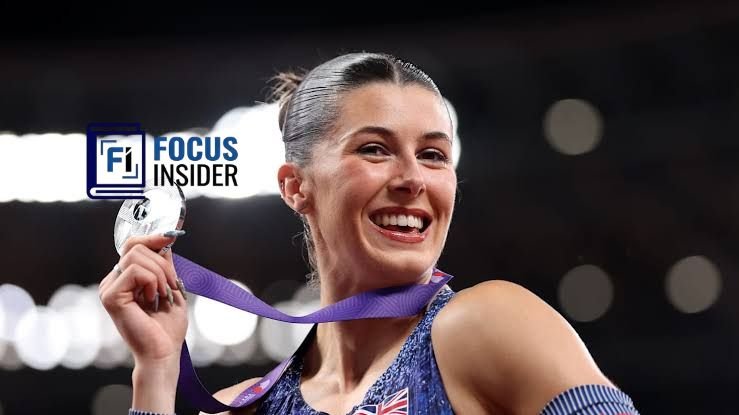
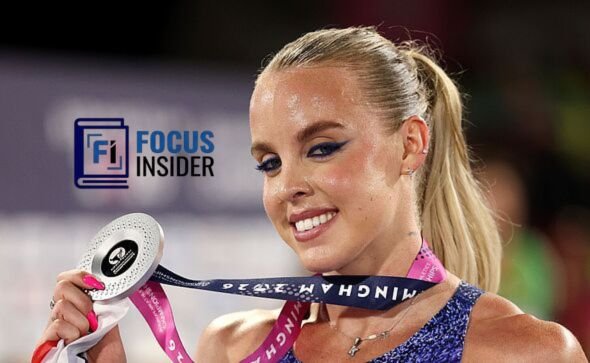
Keely Hodgkinson Break the 42-Year-Old 800m World Record in London?
Keely Hodgkinson has the speed and credentials to challenge one of athletics’ most famous records, but her much-discussed 2026 London appearance did not produce the world record. The British Olympic champion won the women’s 800m at the London Diamond League on 18 July in 1:56.21, well outside Jarmila Kratochvílová’s world record of 1:53.28.
That does not mean the record is beyond Hodgkinson’s reach. Earlier in the season, she had lowered her outdoor personal best to 1:54.33, while her 2026 indoor campaign included a world-record 1:54.87 over 800m. There is also an important update to the “42-year-old” description. Kratochvílová set the record on 26 July 1983, so by September 2026 it has stood for more than 43 years.
Quick Bio
| Information | Details |
|---|---|
| Full Name | Keely Nicole Hodgkinson |
| Date of Birth | 3 March 2002 |
| Age | 24 years (2026) |
| Birthplace | Atherton, Greater Manchester, England |
| Nationality | British |
| Profession | Middle-distance runner |
| Athletics Information | Details |
|---|---|
| Main Event | 800 metres |
| Outdoor 800m PB | 1:54.33 |
| Major Achievement | Olympic 800m champion |
| Olympic Gold | Paris 2024 |
| Indoor 800m Record | 1:54.87 (2026) |
| Outdoor World Record Target | 1:53.28 |
What Is the Women’s 800m World Record?
The outdoor women’s 800m world record remains 1:53.28, set by Czechoslovakia’s Jarmila Kratochvílová in Munich on 26 July 1983. World Athletics continues to list that performance as the official world record.
Its longevity is extraordinary. Generations of Olympic and world champions have competed in the event without surpassing it.
Breaking 1:53.28 requires an average of approximately 56.64 seconds per 400m. More importantly, an athlete must combine elite sprint speed with the strength to maintain an exceptionally demanding pace through the final 200 metres.
That combination explains why the record has survived for so long.
For Hodgkinson, however, the possibility no longer looks purely theoretical. Her performances since winning Olympic gold have demonstrated that she belongs among the fastest 800m runners in history.
Why Keely Hodgkinson Was Considered a Serious Record Threat
The idea of Keely Hodgkinson attacking the outdoor world record gained considerable momentum after her breakthrough performances.
At the London Diamond League in July 2024, she produced a then-British record and personal best of 1:54.61. That performance came shortly before she won Olympic gold in Paris.
Her progress continued despite an injury-disrupted 2025 season.
Then came a major statement in February 2026.
Hodgkinson ran 1:54.87 indoors in Liévin, breaking Jolanda Čeplak’s long-standing short-track 800m world record. The previous record had stood since 3 March 2002—the day Hodgkinson was born.
After that performance, Hodgkinson said she felt closer than ever to challenging the outdoor record, while also acknowledging that many things would have to come together for it to happen.
Her outdoor season then supplied further evidence.
On 7 June 2026 in Stockholm, Hodgkinson ran a new British record of 1:54.33. Although it was another substantial step forward, she finished second as Switzerland’s Audrey Werro produced a remarkable 1:53.98.
That race transformed the wider conversation around the women’s 800m.
The question was no longer simply whether Hodgkinson could eventually approach Kratochvílová’s mark. The event suddenly had multiple athletes operating close to historic territory.
How Close Is Keely Hodgkinson to 1:53.28?
Hodgkinson’s outdoor personal best of 1:54.33 is 1.05 seconds slower than the world record.
In an 800m race, 1.05 seconds is significant, but it is not an impossible-looking gap for an athlete who has continued to improve.
The comparison is straightforward:
- World record: Jarmila Kratochvílová – 1:53.28
- Keely Hodgkinson outdoor PB: 1:54.33
- Difference: 1.05 seconds
- Hodgkinson indoor world record: 1:54.87
World Athletics lists Hodgkinson’s 1:54.33 as the British outdoor record and her 1:54.87 as the short-track world record.
Finding another second, however, becomes increasingly difficult at this level. Improvements measured in tenths of a second can require exceptional fitness, ideal pacing, favourable race conditions and near-perfect execution.
What Happened to the London World Record Attempt?
Before the 2026 London meeting, Hodgkinson had openly discussed the possibility of producing something special in front of her home crowd. Reports in May highlighted London as a potential setting for an attack on the long-standing 800m record.
The actual race unfolded differently.
At the London Diamond League on 18 July, Hodgkinson won in 1:56.21. Femke Broeders-Bol finished second in 1:56.46, while Olympic silver medallist Tsige Duguma took third in 1:56.92.
Therefore, London did not become the scene of the historic 800m breakthrough.
The result should be viewed in context, though. A world-record attempt requires much more than simply having the fastest athlete on the start line. The early pace, positioning, weather, competition and an athlete’s physical condition on that particular day can all affect the final time.
Hodgkinson still won against elite opposition, even if the clock did not threaten 1:53.28.
Why London Remains an Important Venue for Hodgkinson
London Stadium has played an important role in Keely Hodgkinson’s career.
Her 1:54.61 performance there in July 2024 was a British record at the time and provided an important confidence boost before the Paris Olympics.
Two years later, she returned and won again.
The London crowd and familiar surroundings may provide emotional advantages, but a world record ultimately depends on race execution and physical condition rather than venue alone.
Interestingly, the 2026 meeting still produced a major piece of athletics history. Britain’s Josh Kerr broke the men’s mile world record in London, running 3:42.66.
So while Hodgkinson’s world-record ambition did not materialise that afternoon, the stadium proved capable of providing the conditions for an extraordinary distance-running performance.
Audrey Werro Has Changed the World-Record Conversation
One of the biggest developments of the 2026 season has been the rise of Audrey Werro.
At the Stockholm Diamond League, Werro defeated Hodgkinson and ran 1:53.98, becoming only the third woman at that point to break 1:54 outdoors. Hodgkinson’s 1:54.33 in the same race was a British record.
Werro later improved further, with Reuters reporting a personal best of 1:53.70 during her exceptional 2026 season.
That is only 0.42 seconds away from Kratochvílová’s record.
The significance for Hodgkinson is clear: she may not need to chase history alone.
Fast competitors can create the kind of race that makes extraordinary times possible. Rather than relying entirely on pacemakers before running alone through the closing stages, Hodgkinson could find herself pushed deep into a race by athletes capable of maintaining similarly aggressive speeds.
That competitive environment could become an important factor in future record attempts.
What Would Hodgkinson Need to Break the Record?
Several elements would probably need to align.
A Fast but Controlled Opening Lap
Going through 400m too slowly makes the record mathematically difficult. Going through too quickly can cause a severe slowdown over the final 150–200 metres.
The ideal first lap therefore needs to be extremely fast without exhausting the athlete before the decisive closing stages.
Excellent Pacemaking
A specialist pacemaker can reduce some of the early tactical uncertainty and help establish the required rhythm.
The transition after the pacemaker drops out is equally important. Hodgkinson would need to maintain momentum rather than lose valuable tenths of a second.
Peak Physical Condition
Her injury history demonstrates how difficult it is to arrive at a specific race in perfect condition.
Hodgkinson missed significant competition in 2025 because of hamstring problems before returning later in the season.
A genuine outdoor world-record attempt requires an uninterrupted period of high-quality training and, ideally, a race scheduled around peak fitness rather than championship tactics.
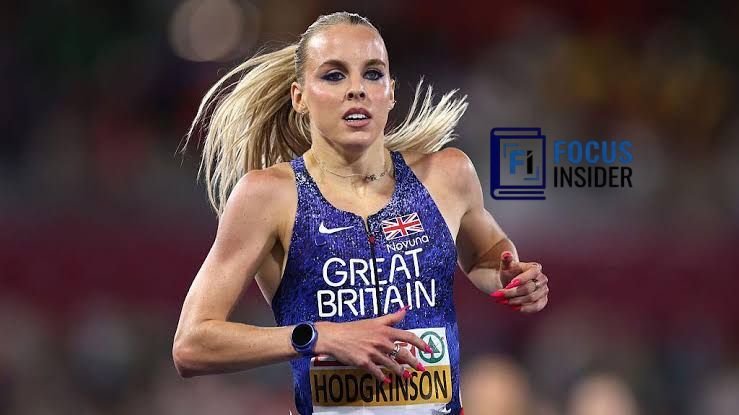
Strong Competition
Werro’s emergence could actually benefit Hodgkinson.
A rival capable of running around 1:54 or faster gives Hodgkinson someone to race rather than forcing her into what is effectively a solo time trial.
The increasingly competitive women’s 800m may therefore improve the chances of someone finally breaking the 1983 mark.
Hodgkinson Has Already Proven She Can Break a Historic Record
Perhaps the strongest argument for taking Hodgkinson’s outdoor ambitions seriously is that she has already succeeded in a similar challenge.
The women’s indoor 800m world record had stood since 2002 before Hodgkinson ran 1:54.87 in Liévin on 19 February 2026.
That achievement does not guarantee an outdoor record. Indoor and outdoor races present different tactical and physical demands.
But it demonstrates Hodgkinson’s ability to prepare specifically for a record-level performance and execute it under pressure.
At 24 during the 2026 season, she also remains at an age where further improvement is possible.
So, Can Keely Hodgkinson Break the 800m World Record?
Yes, the evidence shows that Keely Hodgkinson is close enough for a future attempt to be credible, but breaking 1:53.28 would still require a substantial improvement on her 1:54.33 outdoor best.
London in July 2026 was not the breakthrough. Hodgkinson won in 1:56.21 rather than challenging the record.
The wider picture is more intriguing.
Hodgkinson has become faster, already owns the indoor world record, and is competing in an era in which athletes such as Audrey Werro are pushing the women’s 800m into territory rarely seen in modern athletics.
Kratochvílová’s 1983 record remains intact after more than 43 years. Yet for the first time in a long period, the gap between that famous 1:53.28 and the leading athletes of the present generation has become remarkably small.
Whether Hodgkinson is ultimately the athlete who closes it remains one of the most compelling questions in middle-distance running.
Conclusion
Keely Hodgkinson remains one of the leading athletes capable of challenging the historic women’s 800m world record of 1:53.28. Although her 2026 London race did not produce the record, her 1:54.33 outdoor best and indoor world-record performance show how far she has progressed. With strong competition, ideal pacing and peak fitness, another serious attempt could come in the future. For now, the 1983 record remains intact, but Hodgkinson’s pursuit continues to make the women’s 800m one of athletics’ most fascinating events.